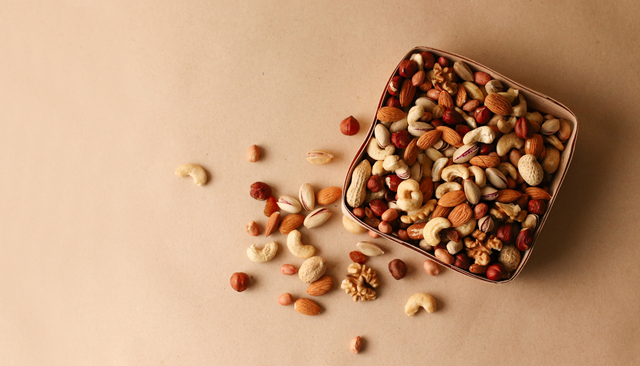
India Slashes Taxes on Consumption of Nuts and Dried Fruits
India’s government has reduced taxes on the consumption of nuts and dried fruits from 12% to 5%, effective as of September 22. The move came as part of a broad overhaul of the country’s Goods and Services Tax (GST) that was intended to boost domestic consumption against the backdrop of soaring US tariffs on Indian goods, as reported by CNBC.
The previous four-tiered GST structure was simplified into a two-tiered structure with a standard rate of 18% and a merit rate of 5%. According to a press release from the Ministry of Finance, various categories of nuts and dried fruits will benefit from a tax reduction:
| CN Code | Description | Previous GST Rate | New GST Rate |
| 0801 | Brazil nuts, dried, whether or not shelled or peeled | 12% | 5% |
| 0802 | Other nuts, dried, whether or not shelled or peeled, such as almonds, hazelnuts or filberts (Corylus spp.), chestnuts (Castanea spp.), pistachios, macadamia nuts, kola nuts (Cola spp.), pine nuts | 12% | 5% |
| 0804 | Dates (soft or hard), figs, pineapples, avocados, guavas, mangoes (other than mangoes sliced, dried) and mangosteens, dried | 12% | 5% |
| 0813 | Fruit, dried, other than that of headings 0801 to 0806; mixtures of nuts or dried fruits of Chapter 8 (other than dried tamarind) | 12% | 5% |
| 2008 | Fruit, nuts and other edible parts of plants, otherwise prepared or preserved, whether or not containing added sugar or other sweetening matter or spirit, not elsewhere specified or included; such as groundnuts, cashew nut, roasted, salted or roasted and salted, other roasted nuts and seeds, squash of mango, lemon, orange, pineapple or other fruits | 12% | 5% |
US and China Extend Tariff Truce Until November
The US and China have agreed to a 90-day extension of their tariff truce, preventing triple-digit duties on each other’s goods from coming into effect. US President Donald Trump signed an executive order on August 11, 2025, extending the pause until November 10, while China’s Ministry of Commerce issued a parallel order the following day, according to Reuters.
In the absence of such an extension, US tariffs on Chinese goods would have shot up to 145%, while Chinese tariffs on US goods would have increased to 125%. Instead, the extension maintains the current US rate of 30% on Chinese goods and the Chinese rate of 10% on US goods.
EU Tariff Proposal: 0% on US Dried Fruits and Quota for Tree Nuts
On August 28, 2025, the European Commission published a proposal that would eliminate tariffs on certain US dried fruits and introduce a tariff rate quota (TRQs) for US tree nuts.
These measures were put forth as part of a package of legislative proposals intended to implement commitments outlined in a joint statement issued by the EU and the US on August 21. Coming weeks after the EU-US political agreement on trade, the joint statement fleshed out further details of the framework agreement between the two economies.
One of the legislative proposals includes the elimination of tariffs on certain dried fruits and the introduction of tariff rate quotas (TRQs) for tree nuts. Specifically, the proposal envisages a 0% customs duty for products including the following: dried sultanas (0806 20 30), dried grapes excluding currants and sultanas (0806 20 90), dried apricots (0813 10 00), dried prunes (0813 20 00), dried fruit – other (0813 40 95), and cranberries (2008 93). Additionally, it envisages the following tariff quota scheme for certain US tree nuts:
| Order number | CN 2025 | Description | In-quota rate | Quota volume |
| 09.9005 | 0802 | Other nuts, fresh or dried, whether or not shelled or peeled (Note: This category includes almonds, hazelnuts, walnuts, pistachios, macadamia nuts, pine nuts, and pecans) | 0% | 500,000 MT |
| 2008 19 | Nuts and other seeds, including mixtures, prepared or preserved (excluding groundnuts) (Note: This category includes roasted almonds and pistachios) |
Aggregate quota volumes shall run for 12-month periods starting from the date of entry into force of the regulation. According to FRUCOM, the TRQs will be managed on a first-come, first-served basis and, once the quota volume is exhausted, the applicable duty rate will no longer be the 0% in-quota rate but rather the MFN rate or the rate that would normally apply to the product concerned coming from the US.
According to an explainer published by the Commission, the European Parliament and Council will have to approve the proposals under the ordinary legislative procedure before the measures can enter into force.
The EU-US joint statement provides indicators of how trade relations between the two economies might evolve. In the statement, the EU pledged to “provide preferential market access for a wide range of US seafood and agricultural goods,” including tree nuts and processed fruits. In addition, the EU and the US committed to “work together to address non-tariff barriers affecting trade in food and agricultural products.” Moreover, the EU pledged to address concerns of US businesses by providing “additional flexibilities” in the implementation of the Carbon Border Adjustment Mechanism and undertaking efforts to “ensure that the Corporate Sustainability Due Diligence Directive (CSDDD) and the Corporate Sustainability Reporting Directive (CSRD) do not pose undue restrictions on transatlantic trade.”
US Tariffs on Goods From India Rise to 50%
New tariffs introduced by the US on imports from India took effect on August 27, 2025. US President Donald Trump signed an executive order on August 6 that introduced an additional 25% duty on Indian goods entering the US, in retaliation for India’s purchases of Russian oil. This new duty, combined with an earlier 25% tariff announced by the US in late July, brings the total US tariff rate on Indian goods to 50%.
US Federal Court Declares Trump Tariffs Illegal; Appeal Expected
In a decision issued on August 29, 2025, the US Court of Appeals for the Federal Circuit ruled that most of US President Donald Trump’s tariffs are illegal. The decision affects Trump’s so-called reciprocal tariffs, imposed on dozens of countries around the world, as well as additional tariffs on China, Mexico, and Canada. The court ruled that, by imposing the tariffs via Executive Orders 14193, 14194, 14195, 14257, and 14266, Trump overstepped the presidential authority granted under the International Emergency Economic Powers Act (IEEPA). As noted by Reuters, the court will allow the tariffs to remain in place until October 14 and the Trump administration is expected to file an appeal with the US Supreme Court.
Switzerland Not Currently Considering Countermeasures Against US
Following the imposition of a 39% tariff on Swiss goods entering the US, the Swiss government released a press release on August 7 saying that it is not currently considering countermeasures against US goods, as such measures would “impose additional costs on the Swiss economy.” Furthermore, the press release states that Switzerland “remains firmly committed to pursuing discussions with the US with the aim of reducing these tariffs as swiftly as possible.” A Swiss delegation to the US on August 5 and 6 resulted in a decision to continue talks with the US.