
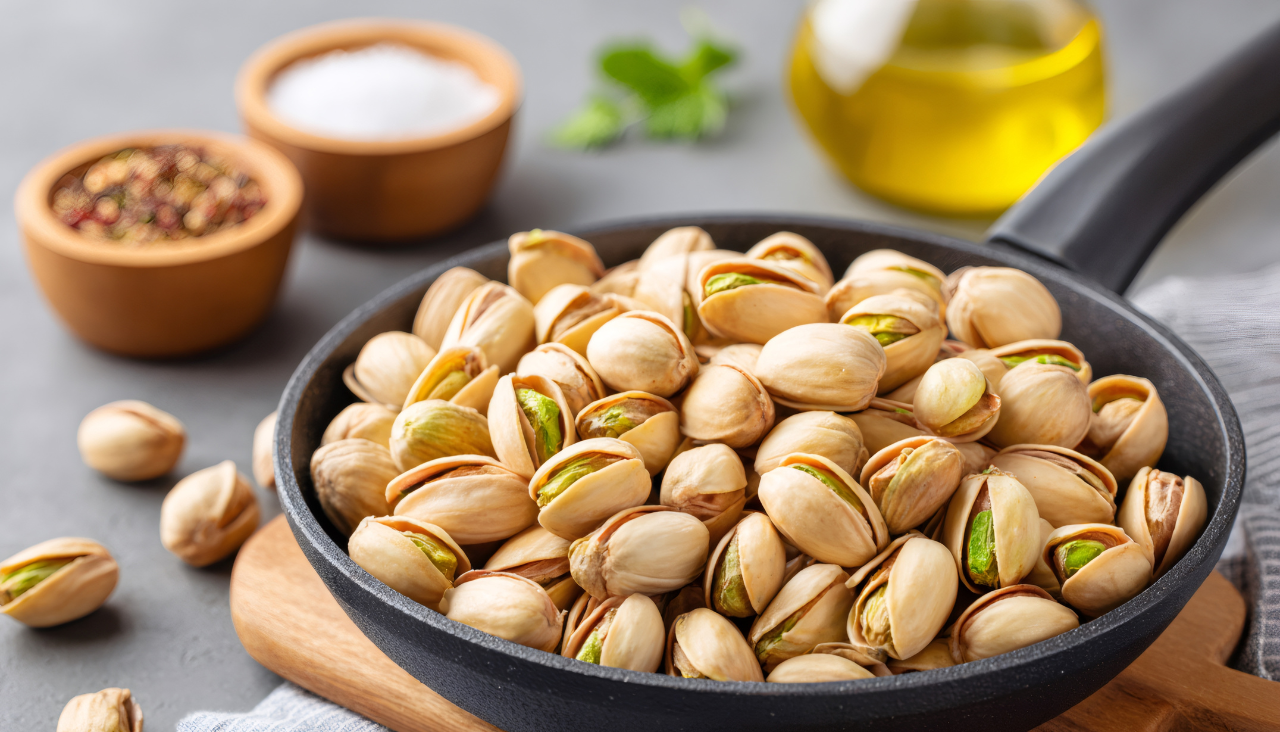
12 weeks of eating pistachios before bedtime altered the stool microbiota diversity of adults with prediabetes
A recent study published in Current Developments in Nutrition explored how 12 weeks of nighttime pistachio consumption affected the gut microbiota of adults with prediabetes (meaning their blood sugar is higher than normal but not yet in the diabetes range).
The study was a single-blind, two-period, randomized crossover trial. A total of 51 participants were instructed to eat either 57 grams (roughly two handfuls) of dry roasted unsalted pistachios or carbohydrate-rich foods as a nighttime snack. The diet periods were approximately 12 weeks long and were separated by a washout period of at least 4 weeks. Stool samples were collected before and after each phase to measure changes in gut bacteria.
The results showed that eating pistachios led to a change in the overall makeup of gut bacteria. Specifically, the researchers observed clustering of gut microbial communities after pistachio intake that were driven by a greater abundance of Roseburia metagenome and Lachnospiraceae bacteria and a lower abundance of Flavonifractor, Eubacterium, Phascolarctobacterium, and Blautia bacteria. These findings suggest that nighttime pistachio intake may alter stool microbial community diversity and composition compared with consumption of a carbohydrate-rich snack.
American Pistachio Growers provided funding for this study.
Riley, T. M., Wright, J., Lamendella, R., Bisanz, J. E., Chen See, J., Kanani, K., Kris-Etherton, P. M., & Petersen, K. S. (2025). Nighttime Pistachio Consumption Alters Stool Microbiota Diversity and Taxa Abundance Compared with Education to Consume 1-2 Carbohydrate Exchanges (15-30 grams) over 12 Weeks in Adults with Prediabetes: A Secondary Analysis from a Randomized Crossover Trial. Current Developments in Nutrition, 9(7), 107481.