
The US Senate Agriculture Committee is expected to release its version of the Farm, Food, and National Security Act of 2026 in June, with a committee markup planned later the same month, according to Committee Chairman John Boozman (R-AR). The House passed the US$390 billion, five-year bill on April 30 with a 224-200 vote—the farthest a farm bill has progressed since the 2018 reauthorization.
The House-passed text preserves the Specialty Crop Block Grant Program through FY2031; expands the Tree Assistance Program to cover commercially unviable orchards—including almonds, hazelnuts, pecans, pistachios and walnuts—resulting from natural disasters; establishes direct assistance for specialty crop producers facing economic crises or market disruptions; and boosts funding for international market expansion programs. The Senate version will require 60 votes to advance past the filibuster, with bipartisan talks ongoing between Chairman Boozman and Ranking Member Klobuchar (D-MN).
Call for Data on PFAS: JECFA 105th Meeting (Food Contaminants)
The Joint FAO/WHO Expert Committee on Food Additives (JECFA) has issued a call for data in preparation for its 105th meeting, which will focus on food contaminants—specifically, a subset of per- and polyfluoroalkyl substances (PFAS).
Governments, interested organizations and individuals are invited to submit data for the toxicological evaluation and for estimating the exposure to the prioritized PFAS listed in Annex 1 of the call. The submission deadline is December 1, 2026.
JECFA is an international scientific expert body established by the Food and Agriculture Organization of the United Nations (FAO) and the World Health Organization (WHO). Its role is to evaluate the safety of food additives, contaminants, naturally occurring toxicants and residues of veterinary drugs in food. JECFA conducts independent risk assessments based on available scientific data and provides recommendations such as acceptable daily intakes (ADIs) and guidance levels. These evaluations are widely used by governments and international bodies to support food safety regulations and Codex Alimentarius standards.
Reminder: EFSA Annual Call for Data on Alternaria Toxins and Other Contaminants
INC members are reminded that June 30 is the deadline for the annual call by the European Food Safety Authority (EFSA) for data on the occurrence of chemical contaminants in food and feed. This call is open to food business operators and other stakeholders.
The call covers a broad list of chemical contaminants, including Alternaria toxins, aflatoxins, ochratoxin A and nickel, among many others.
Data submitted through this call contribute directly to EFSA’s scientific assessments and reports on contaminants in food and feed, which may subsequently inform regulatory decisions by the European Commission. In the absence of robust data, EFSA may need to rely on conservative assumptions that do not fully reflect actual occurrence levels, exposure patterns, or market conditions. Submitting data therefore helps ensure that risk assessments are based on the best available evidence.
Members with relevant occurrence data are strongly encouraged to participate in the call.
Draft EU Regulations Show Increase in Aflatoxin Checks on Peanuts From Argentina to 20%
The European Commission has published a draft regulation (and annex) that would amend the Increased Controls Regulation, which sets out temporary increases of official controls and emergency measures governing the entry into the EU of certain goods from certain third countries. Among other changes, the draft regulation would add peanuts from Argentina to Annex I of the regulation, with a 20% frequency of aflatoxin checks. According to FRUCOM, official publication of the revised texts is expected in the coming weeks.
US FDA Food Traceability Rule Compliance Deadline Confirmed at July 2028; Nut Butters in Scope
The compliance deadline for the US Food and Drug Administration’s Food Traceability Rule (FSMA Section 204) has been set at July 20, 2028, following a 30-month extension proposed by the FDA in August 2025 and subsequently codified by Congress via the Continuing Appropriations Act of 2026. The original deadline was January 20, 2026.
The rule requires all entities that manufacture, process, pack or hold foods on the FDA’s Food Traceability List—including nut butters—to maintain Key Data Elements associated with Critical Tracking Events throughout the supply chain and provide traceability records to the FDA within 24 hours of a request. The rule applies equally to domestic and foreign entities supplying the US market. The FDA has initiated a stakeholder engagement series to support industry readiness ahead of the 2028 deadline.
USDA Issues Disaster Preparedness Guidance for 2026 Hurricane Season; Supplemental Relief Program Extended
As the 2026 Atlantic hurricane season began on June 1, the USDA published guidance urging producers to prepare their operations for potential weather impacts. The 2026 season is forecast to be below normal in the Atlantic Basin, according to NOAA. Nut and dried fruit producers in potentially affected areas are advised to review emergency plans and register with FEMA.
USDA also announced a second payment round under the Supplemental Disaster Relief Program (SDRP) for losses from natural disasters in 2023 and 2024. The payment factor has been increased from 35% to 70%, and the application deadline extended to August 12, 2026. FSA has disbursed US$6.7 billion in SDRP payments to date.
Afghan Dried Fruit Exports Rise on Growing International Demand and Improved Packaging
The Herat Chamber of Commerce and Investment reported that Afghanistan’s dried fruit exports have increased 5% year-on-year, supported by rising international demand and improvements in packaging and product quality, according to Tolo News. Over a two-month reference period, the country exported approximately 3,140 metric tons of dried fruits valued at US$7.6 million, including raisins, almonds, pistachios and dried figs shipped to Iraq, Austria, the United Arab Emirates and several European countries, among other destinations.
Industry representatives noted that Afghan dried fruits are now sold in nearly 20 export markets, compared to only a handful a few years ago. Despite the growth, sector observers noted that Afghanistan continues to face challenges related to branding, marketing and international competitiveness.
US FDA VQIP Application Portal Open Through September 1 for FY2027; Expedited Import Review Available
The Voluntary Qualified Importer Program (VQIP) application portal, administered by the US Food and Drug Administration (FDA), is open until September 1, 2026, for fiscal year 2027. VQIP offers food importers that maintain high supply-chain control standards expedited entry review, reduced examination and sampling, and faster laboratory results at the US border.
To qualify, importers must ensure that their foreign suppliers are certified through the FDA’s Accredited Third-Party Certification Program. For importers of nuts and dried fruits into the US, VQIP participation may offer operational advantages in the current environment of heightened customs enforcement. The FY2027 benefit year runs from October 1, 2026, through September 30, 2027.
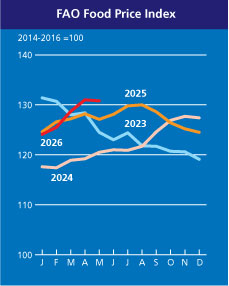
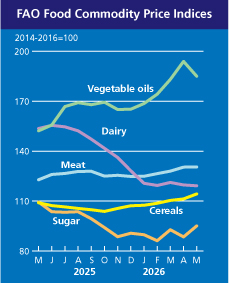
Images: FAO
Wider Access to GLP-1 Medications Opens Up New Opportunities for Nuts and Dried Fruits
Recent developments point a clear global trend toward broader access to GLP-1 receptor agonists—the class of drugs better known by brand names such as Ozempic and Wegovy.
In 2025, the World Health Organization (WHO) added GLP-1 therapies to its Essential Medicines List for managing type 2 diabetes in high-risk patients, and later issued its first guideline on their use in treating obesity.
Momentum has continued into 2026. The first oral GLP-1 treatments are now emerging, marking a shift away from injections toward more convenient daily tablets and potentially expanding the number of people willing or able to use these therapies.
In May 2026, France became the first EU country to announce that it will reimburse the cost of Wegovy and Mounjaro prescribed to patients with severe obesity. In the US, the Centers for Medicare & Medicaid Services launched a new program expanding access for eligible beneficiaries starting in July, and CVS Caremark, which manages pharmacy benefits for roughly 90 million Americans, will start covering Eli Lilly’s GLP-1 medications later this year.
While coverage remains uneven and affordability challenges persist, the overall direction is clear: GLP-1 drugs are becoming more widely available across major markets. For the nut and dried fruit industry, this trend has important implications.
GLP-1 drugs mimic a natural hormone that slows digestion, stimulates insulin release and increasing feelings of satiety. Together, these mechanisms reduce appetite and lead many users to consume significantly less food.
As food intake declines, nutritional quality becomes increasingly important. Research indicates that individuals using GLP-1 medications may fall short of recommended intakes for several key nutrients, including fiber, calcium, magnesium, potassium, iron, choline, and vitamins A, C, D, and E.
This is where nuts and dried fruits offer a clear advantage. Naturally nutrient-rich and calorie-efficient, they deliver a concentrated mix of vitamins, minerals, healthy fats, and plant-based proteins into small, satisfying portions—making them ideal for people eating less but needing more nutrition per bite.
In an article in the American Journal of Clinical Nutrition, researchers urged clinicians to support patients using GLP-1 therapies in optimizing their diets by prioritizing nutrient-dense, minimally processed foods—including nuts, fruits and legumes, in addition to vegetables, whole grains, lean proteins and seeds. Their findings reinforce a central principle: when food intake is reduced, every bite needs to deliver greater nutritional value.
As GLP-1 use expands globally, the focus is shifting from simply eating less to eating better in smaller volumes. In that context, nuts and dried fruits are well positioned to play a meaningful role as compact sources of nutrition in an increasingly appetite-suppressed world.