
Fraser Scott, Agribusiness Development Manager at Ferrero Hazelnut Company

"The key for everyone involved in hazelnuts is having a business that allows long-term economic growth and sustainable production that enables the whole value chain to deliver quality hazelnuts to consumers."
Brazil Nuts and the Amazon Rainforest: A Story of Sustainability, Livelihood, and Conservation

The Brazil nut and the Amazon rainforest are inseparable and as deforestation, wildfires, and land grabbers destroy the rainforest, the negative chain effect begins. Therefore, the conservation of the Brazil nut and the Amazon rainforest depend on each other, thus affecting the millions of people who call the Amazon region home.
Macadamias and Health

Macadamia nuts are valued for their subtle, buttery flavor, velvety-soft crunch texture and their oil profile, high in monounsaturated fats. Due to their versatility, macadamias are used as snacks or as an ingredient in bakery and confectionery products.
New Product Launches: Macadamias

This section examines new products using macadamias that have been recently released.
Industry Highlight: Australian Macadamias

This Country Product Spotlight is the second in a series of industry and market overviews in the Nutfruit magazine. This report provides a snapshot of the Macadamia industry in Australia, with data, analysis, and trends. Additionally, there is an article on conservation, update on the latest health findings, and new product launches.
The Australian Macadamia Industry’s Unique Contribution to Conservation
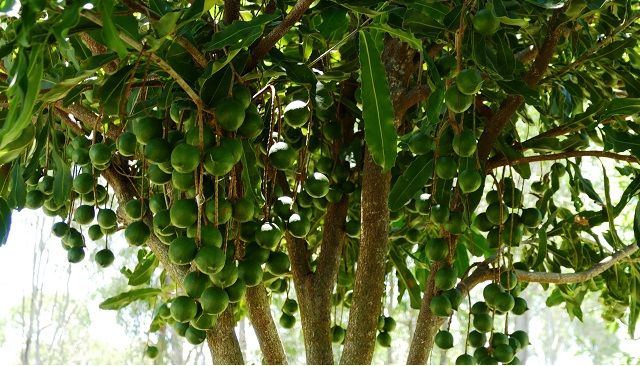
With large ongoing plantings of macadamias globally, it is important to remember that every tree had its origin in the Australian rainforest. Australia has a unique responsibility to both the global macadamia industry and consumers as holder of the wild macadamia gene bank. The Australian Macadamia Society (AMS), whose 700 members produce over 85% of Australia’s macadamia harvest, plays a pivotal role in addressing this responsibility.
Recent Advances in Digital Agriculture Based on Remote Sensing, Biometrics and Artificial Intelligence Applications
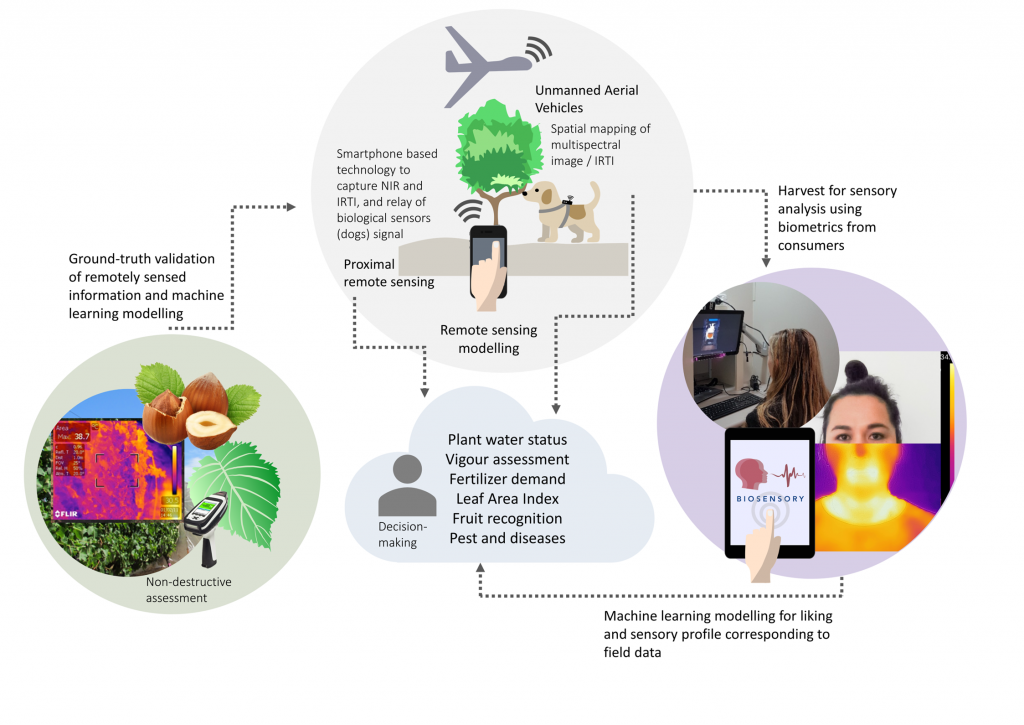
Digital Agriculture deals with the implementation and integration of digital data, sensors and tools on agricultural applications from the paddock to consumers. These technologies can range from: big data, sensor technology, sensor networks, remote sensing, robotics, and unmanned aerial vehicles (UAV). Data processing is performed using new and emerging technologies, such as computer vision, machine learning and artificial intelligence, among others. The latest advances made by the DAFW group for crop monitoring/decision making, assessment of the quality of produces, sensory analysis for consumer perception assessment and animal stress and welfare assessment are presented in this article.
Five Hazelnut Cultivars from Oregon State University for the Kernel Market

Hazelnut is an economically important tree nut for which demand currently exceeds supply. Plantings have expanded in many current production areas, and orchards have been established in areas new to hazelnut production. Nearly all world production is based on selections from the local, wild vegetation, but new cultivars from the Oregon State University breeding program with ‘Gasaway’ resistance to eastern filbert blight (EFB) are now being widely planted. This article describes five cultivars for the kernel market: ‘Tonda Pacifica’, ‘Dorris’, ‘Wepster’, ‘McDonald’, and ‘PollyO’. All have high yields, high kernel quality and nuts that are nearly round with few defects.
Ensuring Nut-byproduct Antioxidants as Agents to Improve Modified Starch-based Film Properties

Hazelnut and pecan byproducts are a great source of antioxidants such as phenolic compounds. The addition of antioxidants from nut-byproducts as agents to improve the properties of modified starch-based materials results in a potential food packing material.
Current State of Hazelnut Cultivation in the Countries of Commonwealth of Independent States

Hazelnuts are a wide-spread valuable species. This manuscript is devoted to the features of the hazelnut cultivation in the countries of Commonwealth of Independent States (CIS countries) including a description of the most promising varieties, main breeding directions, and cultivation systems. Currently, about 20 countries all over the world industrially produce hazelnuts. Turkey, Italy, USA, and Chile are the main manufacturers of hazelnuts. In the CIS countries, Azerbaijan occupies a leading position in the cultivation of hazelnuts with 23 thousand ha, while Georgia (16 thousand ha) and Krasnodar Region (2 thousand ha) take 2nd and 3rd places. The rising demand for final products has significantly increased the interest in this crop in countries where hazelnuts are not a local crop.