
Pecan-medicinal crops intercropping improved soil fertility and promoted interactions between soil microorganisms and metabolites
Background: Pecan [Carya illinoinensis (Wangenh.) Koch] is a widely cultivated dried fruit and woody oil tree with high economic value. Continuous sole planting of pecan caused some land to lie idle and deterioration of soil conditions. Tree and medicinal crops intercropping represents an environmental-friendly and economically feasible solution to these issues. Thus, we aimed to […]
New Meta-Analysis Strengthens Evidence That Nuts May Lower Cardiovascular Risk
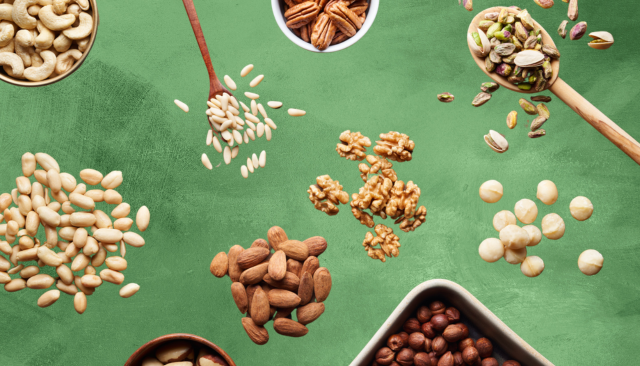
The findings refute a study questioning the benefits of nut consumption A systematic review and meta-analysis funded by the International Nut and Dried Fruit Council (INC) has just been published in the prestigious scientific journal Nutrition, Metabolism and Cardiovascular Diseases.[1] The study showed that current evidence provides a good indication that consuming nuts may advantageously […]
INC Unveils Gen Z Preferences for Nuts and Dried Fruits and Snacking in Latin America

Peanuts, almonds and walnuts are consumed the most among Gen Z in Latin America 96% snack between meals, yogurt, dairy products, and fresh fruits being common choices Taste and health benefits are the primary drivers for consuming nuts and dried fruits INC’s NutTunes campaign set to encourage nut and dried fruit consumption through Spotify The […]
Extraction of bioactive compounds from pecan nutshell: An added-value and low-cost alternative for an industrial waste
The pecan nutshell [Carya illinoinensis (Wangenh) C. Koch] (PNS) is a source of bioactives with important beneficial properties for the human health. PNS represents between 40-50 % of total mass of the nut, resulting as waste without any added value for the food industry. Even though a variety of methods were already developed for bioactive […]
Variation in pigments in pecan testa during kernel development and storage
The pecan (Carya illinoinensis) is an important tree nut worldwide. Browning of the testa during storage considerably reduces its quality. However, the pigments that cause browning and their accumulation patterns are poorly understood. We analyzed the color changes in the testa during the five developmental stages of the kernel after storage at room temperature to […]
What’s in my Pot? Six Colletotrichum Species Causing Anthracnose in Brazilian Pecan Orchards
Pecan (Carya illinoinensis) is one important exotic forest crop cultivated in South America, specifically in Brazil, Uruguay, and Argentina. However, diseases such as anthracnose, favored by high humidity conditions and high summer temperatures, make its cultivation difficult, causing important loss to pecan farmers. This study used morphological and molecular approaches to identify the Colletotrichum species […]
How to find alternative crops for climate-resilient regional food production
CONTEXT. Agricultural food production is both affected by and contributing to climate change. At the global scale, agri-food systems are responsible for one-third of total greenhouse gas emissions. With progressing climate change, the risks of crop failure increase. Thus, an urgent need is to reduce emissions from food systems while increasing their resilience to climate […]
A 4-Week Pecan-Enriched Diet Improves Postprandial Lipid Peroxidation in Aging Adults
Pecans are rich in bioactive compounds known to reduce oxidative stress and provide glucoregulatory benefits. Few studies assessing the effect of a pecan-enriched diet on such health outcomes suggest potential improvements to cardiometabolic health; however, this has not been studied in an older adult population. Thus, we aimed to examine the effect of daily pecan […]
Multigene Phylogeny and Pathogenicity Trials Revealed Alternaria alternata as the Causal Agent of Black Spot Disease and Seedling Wilt of Pecan (Carya illinoinensis) in South Africa
The pecan (Carya illinoinensis) industry in South Africa is growing rapidly, and it is becoming increasingly crucial to understand the risks posed to pecans by fungal pathogens. Black spots on leaves, shoots, and nuts in shucks caused by Alternaria species have been observed since 2014 in the Hartswater region of the Northern Cape Province of South Africa. […]
Long-term intensive management reduced the soil quality of a Carya dabieshanensis forest
The evaluation of soil quality can provide new insights into the sustainable management of forests. This study investigated the effects of three types of forest management intensities (non-management (CK), extensive management (EM), and intensive management (IM)), and five management durations (0, 3, 8, 15, and 20 years) on the soil quality of a Carya dabieshanensis […]