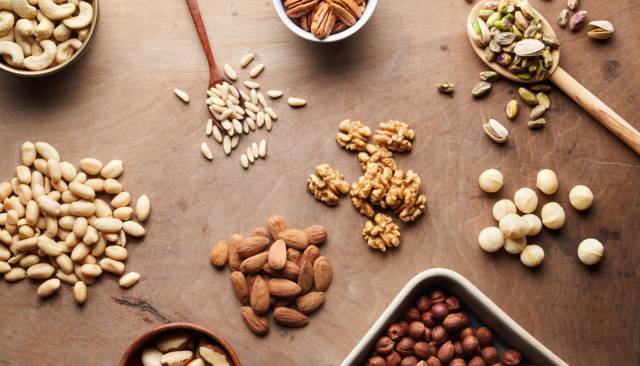
An analysis pooling data from three long-running cohort studies suggests that eating more nuts may be linked to a lower risk of developing dementia later in life. The research included 17,349 adults followed for up to 18 years across the United States and United Kingdom.
People who ate nuts—including both tree nuts and peanuts—more frequently tended to have lower rates of dementia compared with those who rarely or never ate them. After accounting for age, lifestyle and other health-related factors, even modest intake (between 0.1 and 5 grams per day) was associated with about a 20% lower risk, while slightly higher intake showed a similar or slightly stronger association.
The findings come from pooled analyses that combine results across all three cohorts. This combined analysis showed a consistent inverse association between nut intake and dementia risk.
The study adds to a growing body of evidence that nuts may have a role to play in supporting brain health. The researchers concluded that the findings support the inclusion of nuts as part of an overall brain-healthy dietary pattern.
Zhao, M., Yan, M., Fei, L., Chen, H., Wu, M., Li, Y., Huang, L., Shen, J., Liu, G., Guasch-Ferré, M., Salas-Salvadó, J., & Yuan, C. (2026). Nut Consumption and Long-Term Risk of All-Cause Dementia: Preliminary Findings from Three Prospective Cohort Studies. Nutrients, 18(11), 1722.