
8th International Macadamia Symposium

The Yunnan Macadamia Industry Society is hosting the 8th International Macadamia Symposium in Lincang. For the first time, the event will take place in China between October 14 and 20, 2018. Delegates wil share knowledge and discuss on macadamia industry's present and future. Attendees ewill include scientists, expers, growers, processors and marketing professionals coming from […]
The prevalence of food allergy and other allergic diseases in early childhood in a population-based study: HealthNuts age 4-year follow-up.
BACKGROUND: The HealthNuts study previously reported interim prevalence data showing the highest prevalence of challenge-confirmed food allergy in infants internationally. However, population-derived prevalence data on challenge-confirmed food allergy and other allergic diseases in preschool-aged children remain sparse. OBJECTIVE: This study aimed to report the updated prevalence of food allergy at age 1 year from the […]
Introduction of Complementary Foods to Infants.
While earlier food allergy prevention strategies implemented avoidance of allergenic foods in infancy, the current paradigm is shifting from avoidance to controlled exposure. This review focuses on the outcome of recent randomized controlled trials, which have examined the early introduction of allergenic foods for allergy prevention, and discusses the implementation of results in clinical practice. […]
Changes in patient quality of life during oral immunotherapy for food allergy.
BACKGROUND: Quality of life is (QOL) impaired in patients with food allergy and improves following oral immunotherapy (OIT). However, the treatment itself is prolonged and demanding. We examined changes in patient QOL during OIT for food allergy. METHODS: The FAQLQ-PF was administered to children aged 4-12 years undergoing OIT for milk, peanut or egg allergy, […]
A Survey of Self-Reported Food Allergy and Food-Related Anaphylaxis among Young Adult Students at Kuwait University, Kuwait.
OBJECTIVES: To conduct a survey on self-reported food allergy to milk, egg, peanuts, tree nuts, fish, shellfish, wheat, and sesame, as well as reported food-related anaphylaxis and epinephrine prescription practices among Kuwaiti students attending Kuwait University. SUBJECTS AND METHODS: One thousand questionnaires that included data on age, gender, presence of food allergies, and associated details […]
IgE-mediated food allergies in children: prevalence, triggers, and management
Food allergy (FA) is a serious health problem, and severe FA such as food-induced anaphylaxis can often be life threatening. The incidence of FA has been increasing especially in children. They usually develop early in life and affect up to 10% of children. The 2 most common food allergens worldwide are milk and eggs, while […]
Elimination diet and the development of multiple tree-nut allergies.
BACKGROUND: Despite its high prevalence, relatively little is known about the characteristics of patients with multiple tree-nuts allergies. METHODS: Patients (n=60, aged 4-15 years), recruited for a multiple food (tree-nuts, peanut, milk, egg, soy, sesame and wheat) oral immunotherapy (OIT) study, filled a questionnaire on their initial allergy evaluation. Medical records were reviewed. At OIT […]
Almond Irrigation Improvement Continuum: A roadmap for California Almond farmers to improve water efficiency

Launched this year, the Almond Irrigation Improvement Continuum synthesizes decades of almond irrigation research into a single resource that is helping farmers evolve practices and get the most out of their irrigation system investments.
INC Announces New Scientific Evidence Suggesting Nuts May Help Improve Endothelial Function
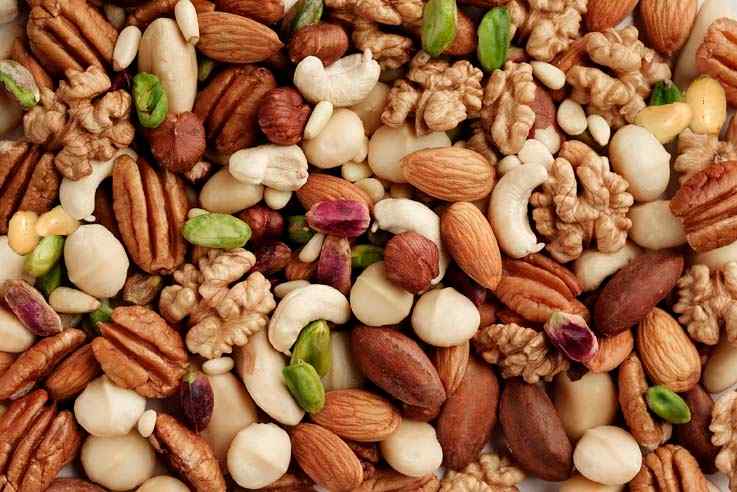
Cardiovascular disease (CVD) unfortunately remains the leading cause of mortality worldwide. Several studies have observed that nut consumption is associated with a reduced risk of CVD due to their content in bioactive compounds which have multiple potential benefits for CVD prevention[1].
New study co-funded by INC reveals nut consumption is associated with reduced weight gain

This recent study published in the European Journal of Nutrition investigated the association between nut intake and changes in body weight after 5 years of follow-up. Researchers also estimated the risks associated with overweight or obesity after higher nut consumption.