Antioxidant Properties of Agri-food Byproducts| and Specific Boosting Effects of Hydrolytic Treatments.

Largely produced agri-food byproducts represent a sustainable and easily available source of phenolic compounds, such as lignins and tannins, endowed with potent antioxidant properties. We report herein the characterization of the antioxidant properties of nine plant-derived byproducts. 2,2-Diphenyl-1-picrylhydrazyl (DPPH) and ferric reducing/antioxidant power (FRAP) assays indicated the superior activity of pomegranate peels and seeds, grape […]

The Equilibrium, Kinetics, and Thermodynamics Studies of the Sorption of Methylene Blue from Aqueous Solution Using Pulverized Raw Macadamia Nut Shells.

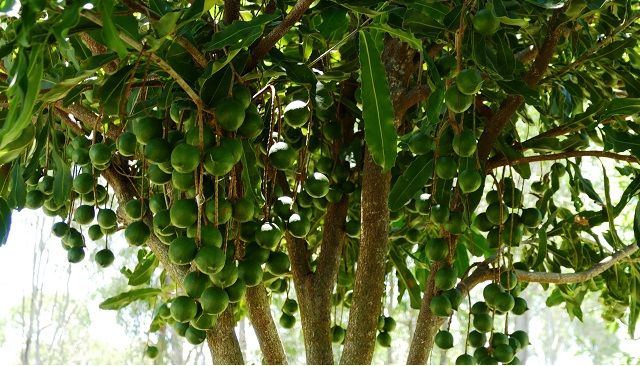
In this study, the potential for pulverized raw macadamia nut shell (MNS) for the sequestration of methylene blue from aqueous media was assessed. The sorbent was characterized using scanning electron microscopy for surface morphology, functional group analysis was performed with a Fourier-transform infrared spectrometer (FT-IR), and Brunauer-Emmett-Teller (BET) isotherm was used for surface area elucidation. […]

Almond byproduct composition impacts the rearing of black soldier fly larvae and quality of the spent substrate as a soil amendment.

Background: Insect biomass is a sustainable alternative to traditional animal feeds, particularly when insects are produced on low-value high-volume agricultural by-products. Seven samples of almond by-product (hulls and shells) were obtained from processors in California and investigated for larvae production. Experiments were completed with and without larvae and spent substrate samples were assessed for their potential […]

Removal of hydrogen sulfide from biogas using activated carbon synthesized from different locally available biomass wastes-a case study from Palestine.

The main aim of this study was to remove hydrogen sulfide (H2S) from biogas by adsorption using synthesized activated carbon prepared using locally available biomass. The effect of the type of precursors, impregnation reagent and bed height was studied in continuous reactors. Three types of biomass wastes (almond shells, eucalyptus and coffee grains) were collected, […]

Turrón Coproducts as Source of Bioactive Compounds: Assessment of Chemical, Physico-Chemical, Techno-Functional and Antioxidant Properties.

The goals of this research were determined the proximate composition, physico-chemical, techno-functional properties, the polyphenolic profile, the organic acids and sugar content and the antioxidant capacities of flours obtained from almonds skins var. comuna (ASFC) and var. fritz (ASFF) coproducts produced in Turrón industry. The chemical composition and physico-chemical properties (pH, water activity and color) were determined. […]

Almond Skin Extracts and Chlorogenic Acid Delay Chronological Aging and Enhanced Oxidative Stress Response in Yeast.

Almond (Prunus dulcis (Mill.) D.A.Webb) is one of the largest nut crops in the world. Recently, phenolic compounds, mostly stored in almond skin, have been associated with much of the health-promoting behavior associated with their intake. The almond skin enriched fraction obtained from cold-pressed oil residues of the endemic Moroccan Beldi ecotypes is particularly rich in chlorogenic acid. […]

Solid state 13C-NMR methodology for the cellulose composition studies of the shells of Prunus dulcis and their derived cellulosic materials.

Lignocellulosic fibers and microcellulose have been obtained by simple alkaline treatment from softwood almond shells. In particular, the Prunus dulcis Miller (D.A.) Webb. was considered as a agro industrial waste largely available in southern Italy. The materials before and after purification have been characterized by 13C CPMAS NMR spectroscopy methodology. A proper data analysis provided […]

Bioreactors for brine denitrification produced during polluted groundwater desalination in fertigation areas of SE Spain: batch assays for substrate selection.

Increasing knowledge of nitrate removal using denitrifying bioreactors has illustrated the usefulness of this management practice for treating discharge water from agricultural land uses. The objective of this study was to assess the viability of almond shell, chopped carob, olive bone, and citrus woodchip as carbon media for denitrification of brine with high nitrate load […]

Removal of ochratoxin A from liquid media using novel low-cost biosorbents.

Ground shells of almonds (ALM), hazelnuts (HAZ), walnuts (WAL), and chestnuts (CHE), coconut fiber (COC), spent coffee grounds (COF), and clementine peel (CLE) were used to remove ochratoxin A (OTA) from both water and an ethanol/water mixture (14:86, v/v). Other very efficient adsorbents like wood biochar (BC) and hydrochar (HC) and a humic acid (HA) […]

Polyphenol Stability and Physical Characteristics of Sweetened Dried Cranberries.

There is little research on how product matrix and processing affect phenolic compounds in sweetened dried cranberries over time. The objective of this research was to assess polyphenol content and stability in sweetened dried cranberries between product matrix types. This research assessed five commercially available sweetened dried cranberry matrices: (1) sliced apple juice infused, (2) […]