
New Product Launches: Hazelnuts

Health Benefits of Hazelnuts

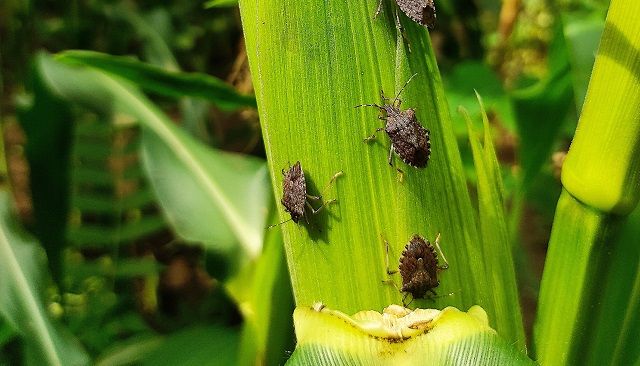
Current Status of Brown Marmorated Stink Bug in Turkey
Impact of α-Linolenic Acid, the Vegetable ω-3 Fatty Acid, on Cardiovascular Disease and Cognition
Given the evidence of the health benefits of plant-based diets and long-chain n–3 (ω-3) fatty acids, there is keen interest in better understanding the role of α-linolenic acid (ALA), a plant-derived n–3 fatty acid, on cardiometabolic diseases and cognition. There is increasing evidence for ALA largely based on its major food sources (i.e., walnuts and […]
Brazil and cashew nuts intake improve body composition and endothelial health in women at cardiometabolic risk (Brazilian Nuts Study): A randomized controlled trial
Several mechanisms have been proposed for the beneficial effect of nuts on health. However, Brazil and cashew nuts remain the least studied. We aim to evaluate the effect of these nuts within an energy-restricted diet on body weight, body composition, cardiometabolic markers, and endothelial function in cardiometabolic risk women. Brazilian nuts study is a randomized […]
Effect of high-moisture extrusion and addition of transglutaminase on major peanut allergens content extracted by three step sequential method.
The effect of high-moisture extrusion (HME) with or without transglutaminase (TGase) on peanut allergen levels and their extractability was studied. A three-stage sequential protein extraction significantly improved the protein recovery in processed samples (extrudate meat analogue); from 5.56 to 18.75 mg/100 mg without TGase, and from 4.59 to 20.82 mg/100 mg with 0.3% TGase. The […]
Tolerance induction through non-avoidance to prevent persistent food allergy (TINA) in children and adults with peanut or tree nut allergy: rationale, study design and methods of a randomized controlled trial and observational cohort study.
Background: Peanuts (PN) and tree nuts (TN) are among the most frequent elicitors of food allergy and can lead to life-threatening reactions. The current advice for allergic patients is to strictly avoid the offending food independently of their individual threshold level, whereas sensitized patients without allergic symptoms should frequently consume the food to avoid (re-)development of […]
Efficacy and safety of oral immunotherapy in children aged 1-3 years with peanut allergy: a randomised placebo-controlled study.
Background: For young children with peanut allergy, dietary avoidance is the current standard of care. We aimed to assess whether peanut oral immunotherapy can induce desensitisation (an increased allergic reaction threshold while on therapy) or remission (a state of non-responsiveness after discontinuation of immunotherapy) in this population. Methods: We did a randomised, double-blind, placebo-controlled study in five […]
Effect of Crushing Peanuts on Fatty Acid and Phenolic Bioaccessibility: A Long-Term Study
Background: Peanuts are consumed worldwide and have been linked to multiple health benefits. Processing may affect the bioavailability of peanut bioactive compounds. Therefore, we aim to evaluate the effects of crushing peanuts on the bioavailability of fatty acids and phenolic compounds in healthy adults. Methods: 44 participants from the ARISTOTLE study consumed 25 g/day of […]
Effects of Hazelnut Consumption on Cardiometabolic Risk Factors and Acceptance: A Systematic Review.
Despite being rich sources of monounsaturated fat and a number of vitamins, minerals, and phytonutrients, hazelnuts have received less attention than some other nut types. A qualitative systematic review was carried out to determine the effects of hazelnut consumption on acceptance and markers of cardiometabolic health, including blood lipids and lipoproteins, apolipoproteins A1 and B100, […]