
Provisional Enforcement of EU MOAH MLs
As noted in a previous INC update, in May 2026, the European Commission’s proposal on maximum levels for mineral oil aromatic hydrocarbons (MOAH) in food received a favorable vote at the Standing Committee on Plants, Animals, Food and Feed (SCOPAFF). Subject to scrutiny by the European Parliament and the Council, adoption of this regulation is targeted for October 2026.
SCOPAFF subsequently issued a statement (available here in draft form) on an updated approach for the enforcement of MOAH in food between May 13, 2026, and the application date of the MLs.
As noted in a FAQ document (Rev.3) on the draft regulatory measures on mineral oil hydrocarbons (MOHs) in food published by the Commission, the representatives of EU Member States agreed in their statement that the MLs set in the proposed regulation should be used as a basis for enforcement as of May 13, 2026.
Update on Timing of Increased Nickel ML in Pecans
As noted previously, the European Commission aims to raise the maximum level (ML) for nickel in pecans from 3.5 mg/kg to 10 mg/kg. According to FRUCOM, the possibility of having the higher ML enforced by a statement to be agreed by Member States was considered for the Standing Committee meeting of June 19, 2026, but ultimately postponed. The next Standing Committee meeting is scheduled for September 25, and the vote may take place then.
EU Publishes Increased Controls Revision Introducing 20% Aflatoxin Checks on Peanuts From Argentina
On June 9, 2026, the European Commission published an implementing regulation amending the Increased Controls Regulation, which sets out temporary increases of official controls and emergency measures governing the entry into the EU of certain goods from certain third countries. Among other changes, the regulation has added peanuts from Argentina to Annex I of the regulation, with a 20% frequency of aflatoxin checks. The regulation enters into force on the 20th day following publication.
Walnut Border Rejection Signals Rising Compliance Risk in Central Asian Trade Routes
Kyrgyzstan’s recent decision to reject a shipment of Chinese walnuts and macadamias at the Torugart border checkpoint is drawing attention to a shift in enforcement standards across Central Asian trade routes, according to an analysis by the commodity news site CMB News. The consignment, totaling 24.6 metric tons, was returned due to non-compliance with labeling requirements, reflecting tighter application of import controls for regulated agricultural goods.
The incident highlights the growing importance of non-price factors in accessing the Eurasian Economic Union (EAEU). According to CMB News, the development comes at a time when the global walnut market remains well supplied, with stable FOB price indications across key origins. Traders are faced with the dual challenge of maintaining margins in a soft price environment while strengthening compliance processes to avoid shipment rejections and associated costs.
Delhi Nut Sector Moves Up the Value Chain as European Prices Stabilize
The nut sector in Delhi is undergoing a gradual shift toward higher-value products as price conditions in Europe show signs of stabilization, according to an analysis by CMB News. Market participants report a growing focus on quality differentiation, processing and value-added offerings, reflecting an effort to move beyond volume-driven trade models toward more margin-oriented strategies.
The adjustment comes in response to a more balanced pricing environment in key export destinations. After a period of volatility, European prices for several nut categories have stabilized, reducing short-term uncertainty and allowing exporters and traders to reposition their commercial strategies. In this context, Indian operators are increasingly prioritizing consistency, grading and product specification to better align with the requirements of quality-conscious buyers.
This shift is also being supported by changes in supply chain structure at origin. Greater attention is being paid to sorting, packaging and compliance processes, enabling exporters to access higher-value segments and strengthen their competitive positioning. Operators are attempting to differentiate through quality and reliability, particularly in segments where premium standards are becoming more clearly defined.
The evolution of the Delhi nut sector reflects a broader structural trend across northern India’s broader food processing industry, where value creation is increasingly linked to processing capability, quality assurance and alignment with destination market requirements.
High-Intensity Winds Cause Significant Walnut Crop Losses in Kashmir
High-intensity winds that swept across the Shopian district in southern Kashmir, India, have caused widespread damage to walnut orchards, raising concerns over significant crop losses at a critical stage of the season, as reported by Greater Kashmir. According to local growers, strong gusts on the evening of June 11 lasted for over an hour, leading to the premature fall of immature walnuts and affecting overall yield potential.
Farmers reported that the impact has been substantial, with estimated losses of up to 30% in some affected orchards. In addition to early fruit drops, the winds caused structural damage to trees, including broken branches and harm to fruit-bearing limbs, further aggravating the situation and potentially affecting future productivity.
US EPA Proposes New Significant New Use Rules for Chemical Substances
The United States Environmental Protection Agency (EPA) has proposed new Significant New Use Rules (SNURs) under the Toxic Substances Control Act (TSCA), covering a set of chemical substances that have previously undergone premanufacture review. The proposal introduces additional regulatory requirements for activities considered “significant new uses” of these substances.
Under the proposed framework, any entity intending to manufacture, import or process the listed chemical substances for a designated new use must submit a Significant New Use Notice (SNUN) to the EPA at least 90 days prior to commencing the activity. The EPA must then complete a risk assessment and issue a determination before the activity can begin.
The measure applies broadly to companies involved in chemical manufacturing, processing and trade, including importers and exporters. In addition to pre-notification requirements, the proposal reinforces existing obligations such as hazard communication, exposure controls and restrictions on environmental releases, aligned with conditions previously established in TSCA Orders for these substances.
The proposed rules also extend notification requirements to exporters, who must comply with TSCA export notification provisions when shipping affected substances to other countries. Economic analysis included in the proposal estimates that compliance may involve administrative and reporting costs for companies submitting SNUNs, although such costs are only incurred if entities pursue new uses covered by the rules.
The proposal covers multiple chemical substances used across industrial applications—including pesticides and fertilizers—many of which have been identified by the EPA as potentially presenting risks to human health or the environment in the absence of specific protective measures.
Stakeholders may submit comments on the proposed measure until July 10, 2026, after which the EPA will review feedback prior to adopting a final rule.
California’s AB 660 Date Labeling Law Takes Effect July 1; “Sell By” Dates Banned on Packaged Nuts and Dried Fruits
California Assembly Bill 660 (AB 660) takes effect July 1, 2026, requiring all packaged food products sold in California to use standardized quality date and safety date labels. The law, signed by Governor Newsom on September 28, 2024, and codified in the California Food and Agricultural Code, makes California the first US state to mandate a two-category date labeling system and ban consumer-facing “sell by” dates on packaged food.
Under AB 660, food manufacturers, processors or retailers responsible for labeling food items for human consumption that choose, or are otherwise required by law, to display a date label must use one of the following uniform terms: “BEST if Used by” or “BEST if Used or Frozen by” to indicate the quality date of a food item. A “Use By” or “Use or Freeze By” term is required for safety-critical dates. The prohibition on “sell by” dates carries a narrow exception for coded dates used solely for internal inventory management purposes.
Packaged nuts and dried fruits fall squarely within the law’s scope. Violations carry consequences including misdemeanor fines of up to US$1,000 per violation, licensing actions and potential litigation under California consumer-protection statutes. Manufacturers and retailers share compliance risk. A sell-through period permits the continued sale of products manufactured before July 1, 2026, that carry non-conforming labels.
Federal date labeling requirements are expected to follow at the national level, according to the law firm Olsson Frank Weeda, with a rule anticipated for late 2026 and a January 2028 effective date.
FDA Front-of-Package Nutrition Labeling Rule Stalled
The US Food and Drug Administration’s proposed rule on front-of-package (FOP) nutrition labeling—projected for finalization in spring 2026—has not yet been issued, according to Packaging Digest and confirmed by the FDA’s own regulatory page, where no final rule has been published as of mid-June 2026. The proposed rule, introduced in January 2025, would require most packaged foods bearing a Nutrition Facts label to display a compact “Nutrition Info box” on the front of pack, indicating whether the product contains low, medium or high levels of saturated fat, sodium and added sugars.
If finalized, the rule would require compliance three years after the effective date for businesses with US$10 million or more in annual food sales, and four years for smaller businesses. The FDA’s timeline for a final rule remains uncertain following the change in administration and shifting agency priorities in 2025-2026.
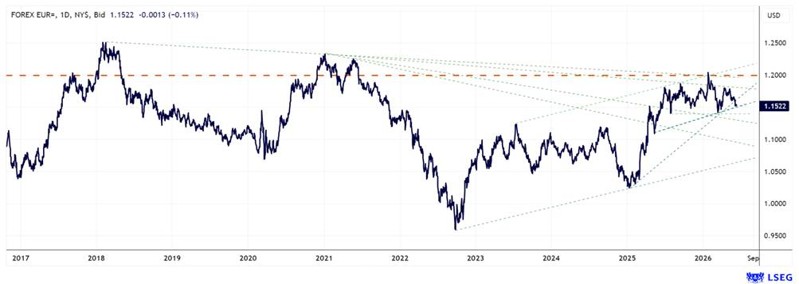
USD/EUR exchange rate, 2017-Present
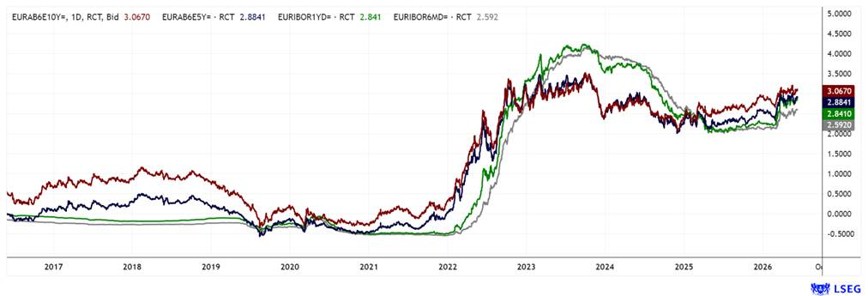
Eurozone Interest Rates, 2017-Present
Images: London Stock exchange Group, obtained via EY.
Fertilizer Supply Risks Rise in Türkiye Amid Hormuz Disruptions
Rising geopolitical tensions in the Middle East and ongoing shipping disruptions in the Strait of Hormuz are increasing pressures on Türkiye’s fertilizer sector, which relies heavily on imports, according to the Hürriyet Daily News. While initial concerns were limited, prolonged instability is now exposing more significant risks for agricultural production and input availability.
Industry representatives reported growing logistical bottlenecks affecting fertilizer imports and exports, with some companies struggling to secure supply while others are offering available stocks at higher prices. The disruptions are particularly critical given that the Strait of Hormuz accounts for a substantial share of global fertilizer-related trade flows, including sulfur and urea.
The situation is raising concerns about fertilizer affordability and usage, especially as sulfur—a key input in phosphate fertilizers—faces supply constraints. Reduced fertilizer use could lead to lower crop yields and quality, particularly in lower-income countries where farmers are more sensitive to price increases.
In Türkiye, where approximately 90% of chemical fertilizers are imported, the impact is especially pronounced. Key sectors such as cereals, fruits, vegetables and nuts—including hazelnuts—depend heavily on sulfur- and phosphate-based fertilizers. Agricultural stakeholders warned that prolonged supply disruptions during peak usage periods could significantly affect both producers and input suppliers.
Experts also cautioned that continued shortages may push farmers toward alternative fertilizers, although these substitutes may not fully replicate the effectiveness of sulfur-based products.
At the time of this report, it was unclear what immediate impact the US-Iran deal announced on June 15 would have on commercial shipping in the region. Senior US officials told Reuters that ship traffic in the Strait of Hormuz was expected to gradually ramp up.
EU Moves to Simplify Fertilizer Rules
On June 16, 2026, Council and Parliament negotiators reached a political agreement on the Commission’s “omnibus VI” package, which would simplify provisions relating to fertilizers, among other products.
The co-legislators agreed to simplify the EU’s fertilizing products regulation, with the aim of supporting EU farmers and innovation and competitiveness in the EU’s fertilizer sector without compromising health and environmental protection.
The Commission had proposed replacing the extended REACH registration requirement—an additional registration obligation that applies to certain substances used in fertilizing products beyond the standard requirements of the EU’s REACH Regulation (Registration, Evaluation, Authorization and Restriction of Chemicals)—with the ordinary REACH regime. However, the co-legislators chose to retain a registration obligation for substances that have a harmonized classification as particularly harmful.
The informal agreement must now be endorsed by both Parliament and Council. It will then enter into force 20 days after it has been published in the Official Journal of the European Union.