
A new study by the European Commission’s Joint Research Centre (JRC) examines the potential economic impact of reducing maximum residue levels (MRLs) to the limit of quantification (LOQ) for 18 particularly hazardous pesticides that are not approved in the EU. The substances are used on 235 commodities exported to the EU from 86 countries. Depending on how exporters respond to stricter limits, the study estimates that EU agricultural imports could decline by between 0.4% and 41%. The study comes as the European Commission considers stronger alignment of production standards for imported products. The Commission has stated that it wants the most hazardous pesticides banned in the EU for health and environmental reasons not to re-enter the EU through imported products. The Food and Feed Simplification Package, proposed by the Commission in December 2025, lays the groundwork for action on specific active substances, subject to case-by-case impact assessments. No decision has been taken to reduce the MRLs for the 18 substances examined by the JRC.
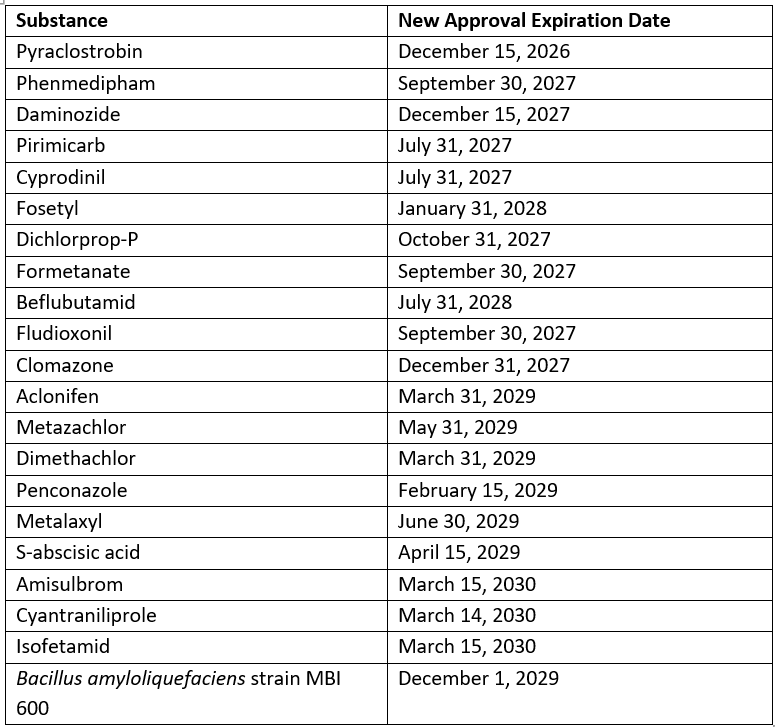
In other news, the European Commission has published Implementing Regulation (EU) 2026/1826, extending the approval periods of the following active substances:
Finally, the European Food Safety Authority (EFSA) has launched a public consultation on the setting of a new maximum residue level (MRL) for acetamiprid in grapes, among other products. As background, Nisso Chemical Europe GmbH submitted a number of studies and scientific data in the frame of an application dossier for the setting of a MRL for acetamiprid. The consultation aims to determine whether other relevant scientific data, studies and other information are available. The deadline to submit comments is September 14, 2026.