
Reuse of Almond Skin to Formulate a New Gluten- and Lactose-Free Bakery Product
This work aimed to propose the reuse of processing waste from the Sicilian almond (Prunus amygdalus Batsch.) cultivar Tuono for the formulation of a new functional baked product (muffin) that is gluten- and lactose-free. Muffins were prepared using orange juice, rice flour, extra virgin olive oil, and enriched almond skin (3% and 6% w/w). The […]
Water use dynamics of almond and pistachio crops in the Mediterranean region amid climate change
Almond and pistachio are socio-economically significant tree crops grown in California’s San Joaquin Valley (SJV). Continuing commercial production with efficient irrigation planning under changing climate requires an extensive understanding of their biophysical interactions such as altered phenology, biomass accumulation, transpiration, and other processes. This study examines the phenology and water use (ETc) responses of almonds […]
Intercropping alfalfa during almond orchard establishment reduces winter soil nitrogen and water losses, provides on‐farm revenue
The ecosystem benefits linked to intercropping and diversified agroecosystems is an area with increasing research interest, particularly in sustainable food production and farm resilience to extreme climate variability. Interrow cropping of alfalfa (Medicago sativa L.) in almond [Prunus dulcis (Mill.) D. A. Webb] orchards during the 3–4 non-bearing, establishment years has potential to advance sustainable […]
Almond Consumption Modestly Improves Pain Ratings, Muscle Force Production, and Biochemical Markers of Muscle Damage Following Downhill Running in Mildly Overweight, Middle-Aged Adults: A Randomized, Crossover Trial
Background: Almonds promote cardiometabolic health benefits; however, the ergogenic effect of almond supplementation on exercise recovery is less explored. Objectives: We evaluated the impacts of raw, shelled, almonds on pain, muscle force production, and biochemical indices of muscle damage and inflammation during recovery from eccentrically biased exercise. Methods: Using a randomized, crossover design, 26 healthy […]
New Meta-Analysis Strengthens Evidence That Nuts May Lower Cardiovascular Risk
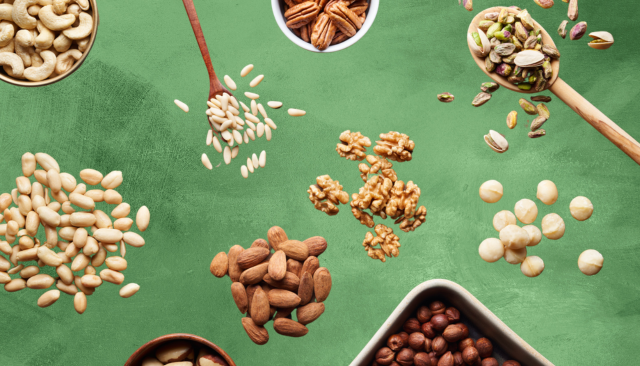
The findings refute a study questioning the benefits of nut consumption A systematic review and meta-analysis funded by the International Nut and Dried Fruit Council (INC) has just been published in the prestigious scientific journal Nutrition, Metabolism and Cardiovascular Diseases.[1] The study showed that current evidence provides a good indication that consuming nuts may advantageously […]
Effect of pilot-scale high-temperature short-time processing on the retention of key micronutrients in a fortified almond-based beverage: implications for fortification of plant-based milk alternatives
The effect of thermal processing treatments on key micronutrients in fortified almond-based beverages has not been well characterized. An almond-based beverage was produced in a pilot plant, fortified with vitamin A palmitate, vitamin D2, riboflavin (vitamin B2), calcium carbonate, and zinc gluconate, and was processed using various high-temperature short-time (HTST) pasteurization treatments. Naturally present micronutrients […]
Exploring the bioactive potential of dried fruit by-products: a focus on hazelnut, peanut, and almond teguments and shells
Dried fruits are renowned for their nutritional value, particularly their seeds. However, their skins, shells, and hulls also hold significant nutritional and commercial potential, yet remain largely unexplored for their bioactive compounds. This study examines the teguments and shells of three types of dried fruits – hazelnut, peanut, and two almond varieties. Ethanol extracts from […]
Linking Conventional and Organic Rainfed Almond Cultivation to Nut Quality in a Marginal Growing Area (SE Spain)
The need to improve agroecosystem sustainability to secure yields, minimize environmental impacts and improve soil health is widely recognized. Organic production systems are one of the strategies that may be used to alleviate the negative environmental repercussions of conventional agriculture. In the present study, we compared the impact of conventional and organic production systems on […]
Effects of energy-restricted diets with or without nuts on weight, body composition and glycaemic control in adults: a scoping review
Energy-restricted (ER) diets promote weight loss and improve body composition and glycaemic control. Nut consumption also improves these parameters. However, less is known about the combined benefit of these two strategies. This scoping review implemented a systematic search of Medline, Embase and Scopus to identify randomised controlled trials evaluating the effect of ER diets with […]
The Effects of Almond Consumption on Cardiovascular Health and Gut Microbiome: A Comprehensive Review
The consumption of almonds has been associated with several health benefits, particularly concerning cardiovascular and intestinal health. In this comprehensive review, we compile and deliberate studies investigating the effects of almond consumption on cardiovascular disease (CVD) risk factors and gut health. Almonds are rich in monounsaturated fats, fiber, vitamins, minerals, and polyphenols, which contribute to […]