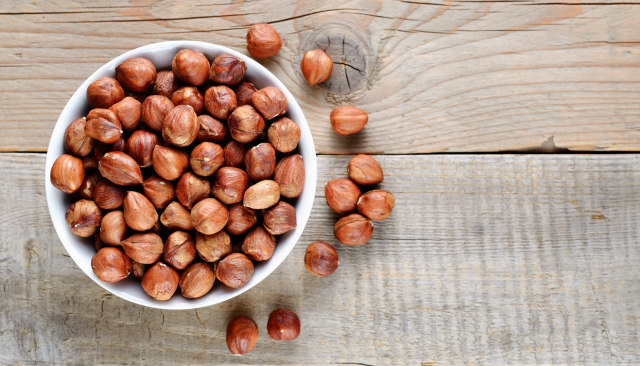

A new study from China adds to the evidence connecting tree nuts with brain health in later life. Published in Food Science and Human Wellness, the research analyzed data from 4,275 adults aged 55 and older. Researchers looked at participants’ intake of tree nuts (almonds, cashews, chestnuts, hazelnuts, macadamias, pecans, pine nuts, pistachios and walnuts) and compared this with their results on a battery of cognitive tests and with their likelihood of mild cognitive impairment (MCI), a transitional stage between normal age-related decline and dementia.
After adjusting for demographics, lifestyle, overall diet quality, and chronic disease history, higher tree nut intake was associated with better global cognition scores. Higher intake was associated with better performance on tests of memory, attention and executive function, with similar but less consistent results for verbal fluency. Participants who ate 10 grams or more of tree nuts per day had 31% lower odds of MCI than those who ate none (odds ratio 0.69).
The authors noted that the average daily nut intake among Chinese residents was only 3.6 grams in 2015 to 2017, and that about half of their own participants fell short of the Chinese Dietary Guidelines’ recommendation of about 10 grams of nuts per day, underscoring the potential importance of promoting nut consumption among middle-aged and older Chinese adults.
Reference: Zhang, L., Luo, Y., Yu, J., Li, B., Peng, J., Li, T., Li, F., & Rong, S. (2026). Association between the consumption of tree nut and peanut and cognitive performance among middle-aged and older adults: Evidence from the Chinese Square Dancer Cohort. Food Science and Human Wellness, 16.