
The information contained herein was prepared between mid-September and October 2026.
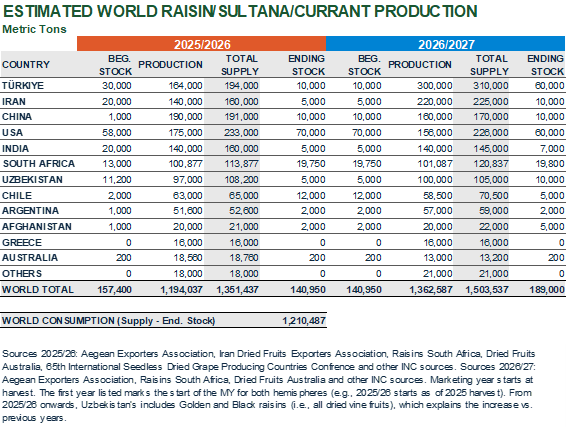
Türkiye. According to the Aegean Exporters’ Association, as the season progressed, weather conditions were generally favorable, and the crop was not affected by the cold weather experienced in the previous season or by any major disease pressure. Based on field assessments, production was therefore revised to 300,000 metric tons, up 83% from the prior season and 3% from the preliminary forecast. The overall supply balance continues to be supported by sustained market demand.
Exports in the 2026/27 season reached 11,736 MT, with a total value of approximately US$30.3 million. Export volume increased by a significant 50% compared to 7,820 MT in the previous period.
Iran. By the time of reporting, a good-sized crop was expected, which could bring some downward pressure on prices once larger volumes become available. The depreciation of the local currency was also reported to be continuing, with further weakening anticipated.
China. According to industry sources, a large crop was initially observed during fruit set in Xinjiang, leading to expectations of a bumper harvest. However, during the drying process, the drying ratio was found to be quite high, with nearly 5 kg of fresh grapes required to produce just 1 kg of raisins. The main reason was that the local government in Turpan implemented water-use controls, resulting in insufficient water supply for the grapevines. Coupled with the extreme heat experienced this year, sugar accumulation in the grapes was very slow, and many grapes dried on the vine. Therefore, production was revised down by 20% to 160,000 MT, from the earlier forecast of 200,000 MT.
USA. The raisin growing region in California experienced good growing conditions, especially during summer followed by warm sunny days ideal for drying. Hardly any measurable rain was observed during July and mid-September. This year’s crop is 2–3 weeks early and deliveries from growers started in September and coming in full swing since then. Early indications suggest an average size crop of 150,000–160,000 MT but of very good quality. Shipments during the month of August (the first month of its fiscal year) were up 8% compared to the same time last year and are expected to outperform last year’s shipments, at least through December.
South Africa. As reported by Raisins South Africa, by the end of September, most vineyards in the main raisin-producing regions were at or approaching flowering. Above-average early-season rainfall in some areas has supported good vineyard development, although the wetter conditions have increased disease pressure in certain production areas. It remains too early to provide a 2027 crop estimate, with flowering, fruit set, summer temperatures and drying conditions still key determinants. An El Niño outlook for the 2026/27 summer may bring hotter and drier conditions, which will be closely monitored.
South Africa remains strongly export-oriented, with the majority of production destined for international markets. As the 2027 season develops, the industry remains well positioned to build on its established production base, with continued focus on quality, reliable supply and readiness to meet international market requirements.
Australia. As reported by Dried Fruits Australia, the season was affected by significant rainfall earlier in the year, which impacted growing conditions and delayed the final assessment of production. As of this report, some fruit still needed to be dried and riddled, although the current production estimate was expected to be broadly in line with the figure reported.