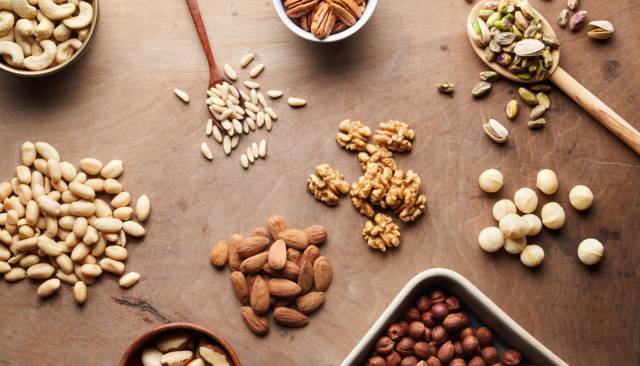
New research from the Framingham Heart Study suggests that higher nut consumption may be associated with better cognitive performance, particularly among adults with less healthy lifestyle profiles. The study, published in Food & Function, analyzed data from 1,742 stroke-free participants and examined associations between habitual nut intake, cognitive function, brain health markers, and the incidence of stroke and dementia.
After adjusting for demographic, lifestyle and health-related factors, higher nut intake was positively associated with global cognitive function. The association was particularly evident among participants with lower diet quality or lower levels of physical activity. Among highly physically active participants, greater nut consumption was also associated with larger total brain volume, although nut intake was not independently associated with brain volume across the overall study population.
The researchers also explored associations among 29 stroke survivors, finding that higher nut intake was associated with higher concentrations of vascular endothelial growth factor (VEGF), a factor involved in blood-vessel formation and potentially neuroprotection. Over 10 years of follow-up, nut consumption was not associated with the incidence of stroke or all-cause dementia.
The authors concluded that nuts may support cognitive performance, particularly as part of dietary and lifestyle approaches targeting individuals with greater cardiovascular and cognitive risk.
Reference: Amanat, S., Dordevic, A. L., Pase, M. P., & Cardoso, B. R. (2026). Nut consumption, cognitive function and brain health markers in individuals with and without stroke: cross-sectional and longitudinal findings from the Framingham heart study. Food & Function, 17(17), 7734–7747.