
Safety of oral immunotherapy for cashew nut and peanut allergy in children – a retrospective single-centre study
Aim of the study: Oral immunotherapy (OIT) is increasingly used for the treatment of childhood food allergies, with limited data available on cashew nut OIT. This real-life study investigated the safety and feasibility of cashew nut OIT, comparing it with peanut OIT, with a focus on the up-dosing process. Methods: We analysed cashew nut (n […]
Impact of Heat and Pressure Processing Treatments on the Digestibility of Peanut, Hazelnut, Pistachio and Cashew Allergens
Food processing can alter protein biochemical properties, impacting immunoreactivity and allergenicity. A key feature of food allergens is their resistance to enzymatic digestion, particularly by pepsin and trypsin. This study compares the digestomes of raw and heat- and/or pressure-treated peanuts, hazelnuts, pistachios and cashews using the INFOGEST harmonized digestion protocol and analyzing their IgE-binding capacity […]
Comparing two Peanut Desensitization Protocols in pre-school children: a Real-World Clinical Practice
Background: Peanut allergy is the main food allergy in childhood and poses significant health concerns. Objective: This study aimed to critically evaluate the effectiveness and safety of Oral Immune Therapy (OIT) using crushed peanuts versus peanut puffs. Methods: Children with an allergist diagnosed peanut allergy based on a history of an IgE-mediated reaction and a […]
Safety and adherence of early oral immunotherapy for peanut allergy in a primary care setting: a retrospective cross-sectional study
Background: Peanut allergy is a common food allergy with potentially life-threatening implications. Early oral immunotherapy for peanut allergy (P-EOIT) has been shown to be effective and safe in research and specialty clinic settings. Provision of P-EOIT in primary care would make it available to more patients. We sought to assess the safety of P-EOIT in […]
Air pollution is associated with persistent peanut allergy in the first 10 years
Background: The role of air pollution in eczema and food allergy development remains understudied. Objective: We aimed to assess whether exposure to air pollution is associated with eczema and food allergies in the first 10 years of life. Methods: HealthNuts recruited a population-based sample of 1-year-old infants who were followed up at ages 4, 6, […]
New Meta-Analysis Strengthens Evidence That Nuts May Lower Cardiovascular Risk
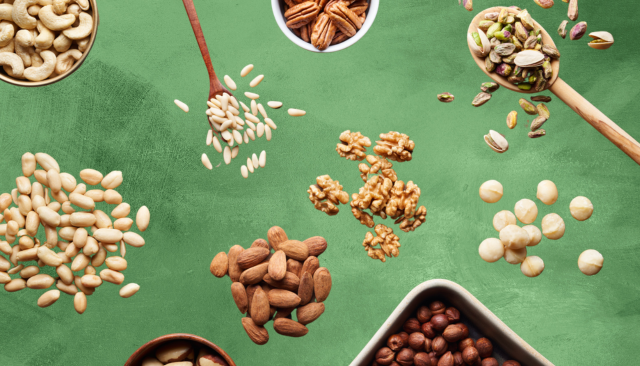
The findings refute a study questioning the benefits of nut consumption A systematic review and meta-analysis funded by the International Nut and Dried Fruit Council (INC) has just been published in the prestigious scientific journal Nutrition, Metabolism and Cardiovascular Diseases.[1] The study showed that current evidence provides a good indication that consuming nuts may advantageously […]
Oral Food Challenge in Children with Tree Nut and Peanut Allergy: The Predictive Value of Diagnostic Tests
Food allergy (FA) affects approximately 6-8% of young children, with a peak prevalence at approximately one year of age. Tree nut and peanut allergies are among the main causes of anaphylaxis in the world. The gold standard for the diagnosis of FAs is the oral food challenge (OFC). Other diagnostic tests used in the clinical […]
Peanut allergen characterization and allergenicity throughout development
Introduction: Peanut allergy (PA) in children is a major concern. There is a need for better biological material for both diagnosis and oral immunotherapy (OIT) treatments. The unique state of seeds at early reproductive stages may affect the allergenicity of storage proteins, and impact clinical diagnostic and OIT protocols. The objective of this study was […]
Epicutaneous immunotherapy for the treatment of peanut allergy
Peanut allergy treatment options remain limited, but novel approaches are being studied, including epicutaneous immunotherapy (EPIT). EPIT uses the cutaneous immune system to promote tolerance to food allergens. Viaskin™ Peanut, an approach to EPIT in late-stage clinical development uses an occlusive patch with a condensation chamber that enables natural epidermal water loss to solubilize dry […]
Safety and feasibility of peanut, tree nut, and sesame oral immunotherapy in infants and toddlers in a real-world setting
Background: Oral immunotherapy (OIT) for food allergy has been largely studied in older children within the context of clinical trials, and its availability has historically been limited for younger patients with food allergy. Data has shown that the most impact may actually be seen with the use of OIT in younger infants and toddlers. Objective: […]