
INC Executive Committee Meeting in Luxembourg

INC Executive Committee met to discuss the next steps of the INC’s strategic plan and define a concrete plan of actions. This October 6, the INC Executive Committee met in Luxembourg to discuss the next steps of the INC’s strategic plan and define a concrete plan of actions taking into consideration the most important priorities […]
INC Attends Discussions with European Commission Officials

Topics covered by EU officials included food safety, nutrition and communication, and sustainability On October 6, 2023, the INC participated in an event featuring officials from the European Commission’s DG for Health and Food Safety and DG for the Environment. The event, held in Brussels, Belgium, was organized under the umbrella of FRUCOM-CEEREAL and was […]
Peanut Intake Enhances Production of Metabolites Related to Memory and Mood
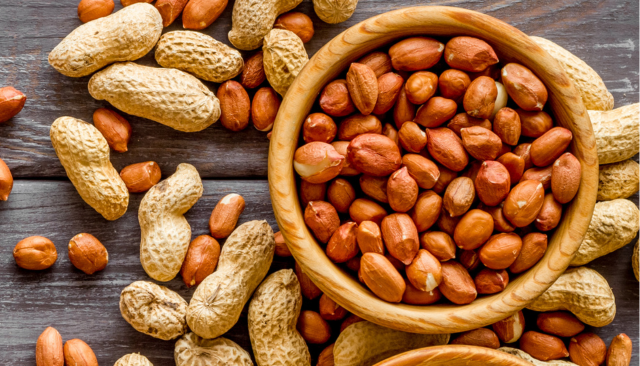
Consuming peanuts or peanut butter may contribute to the production of metabolites involved in cognition and stress response In a recent study published in the Journal of Functional Foods, researchers set out to assess the impact of peanut consumption on the gut–brain axis. Specifically, this randomized controlled trial aimed to evaluate the association of urinary […]
Greater Nut Consumption Could Significantly Reduce Healthcare Costs

AU$980 million could be saved annually if every Australian were to eat a handful of nuts daily A new study commissioned by Nuts for Life has found that greater nut consumption could deliver major healthcare cost savings. The study, conducted by KPMG, found that healthcare expenditure could be reduced by AU$980 million each year if every Australian […]
Early Intervention Curbs Peanut Allergies In Babies

Starting peanut oral immunotherapy during infancy can improve a child’s immune response over time In a new study published in the Journal of Allergy & Clinical Immunology: In Practice, children aged 7 to 11 months developed tolerance by eating tiny amounts of peanuts in a step-by-step, controlled process. For this retrospective study, researchers at the […]
Safety and effectiveness of peanut oral immunotherapy in children under 12 months
Peanut oral immunotherapy is an option for the treatment of peanut allergy. Our study suggests that peanut oral immunotherapy in children aged less than 12 months is safe and effective. https://doi.org/10.1016/j.jaip.2023.07.009
Consumption of peanut products enhances the production of microbial phenolic metabolites related with memory and stress response: Results from the ARISTOTLE trial
Based on evidence demonstrating that gut microbiota can metabolize dietary polyphenols to more readily absorbable phenolic acids, this study aimed to evaluate the association of urinary microbial phenolic metabolites (MPMs) related to peanut intake with memory function and stress response. A total of 63 healthy young adults from a randomized controlled trial completed the intervention, […]
The relevance of oral food challenge in a patient allergic to peanut and tree nuts
Peanut allergy is one of the most common food allergies in childhood. In vitro cross-sensitization between peanut and tree nuts (TN) is high, but only a subgroup of patients allergic to peanut will have a concomitant allergy to one or several TN. In this article, the authors report a case of a 12-year-old boy who […]
Reactivity to allergenic food contaminants: A study on products on the market
Background: The frequency and severity of reactions in food-allergic consumers exposed to unintentional food allergen contamination during production is unknown. To warn allergic consumers, it has been suggested for pre-packaged foods to be precautionary labelled when the food allergen contamination may exceed the amount to which 1%-5% of the population could react (ED01-ED05). ED01 for […]
Citrin: a novel food allergen in citrus seeds and citrus-derived pectin that shows cross-reactivity with cashew and pistachio
Background: Patients exquisitely sensitive to cashew/pistachio are at risk for allergic reactions to citrus seeds and pectin. Objective: In this study, we sought to examine whether pectin is contaminated with citrus seeds, to identify a culprit antigen in citrus seeds, and to assess for cross-reactivity among allergens in citrus seeds, citrus pectin, and cashew/pistachio. Methods: […]