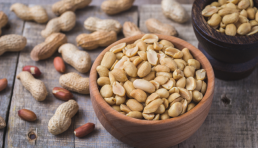

Effect of Nut Consumption on Blood Lipids: An updated Systematic Review and Meta-analysis of Randomized Controlled Trials
Aims: Nuts are nutrient-dense foods touted for their health-promoting effects, especially regarding cardiovascular health, yet inconsistencies in the literature remain in relation to their effect on blood lipids. Hence, a systematic review and meta-analysis of randomized controlled trials (RCTs) was conducted to determine the effect of nut intake on blood lipids. Data Synthesis: MEDLINE-PubMed and Cochrane databases were searched. 113 unique trials met eligibility criteria (n=8060 adults with various health status) assessing the effect of a median daily dose of 45.5 g/d of nuts compared to a non-nut control on blood lipid outcomes met inclusion criteria. Overall, nut consumption resulted in moderate reductions in total cholesterol (mean difference, -0.14 mmol/L [95% confidence interval, -0.18 to -0.10 mmol/L]) and LDL-C (-0.12 mmol/L [-0.14 to -0.09 mmol/L]), with small reductions in triglycerides (-0.05 mmol/L [-0.07 to -0.03 mmol/L]), TC:HDL-C (-0.11 [-0.16 to -0.06]), LDL-C:HDL-C (-0.19 [-0.24 to -0.12]), and apolipoprotein B (-0.04 g/L [-0.06 to -0.02 g/L]). There was no significant impact on HDL-cholesterol or other assessed measures. Certainty of evidence was high for apolipoprotein A, and generally moderate/low for all other outcomes. Sensitivity analysis did not change the evidence on the main outcomes. Significant effect modifications in subgroup analysis were shown for most of the lipid parameters assessed. None of these subgroup effects altered the evidence of heterogeneity for any primary outcome. Conclusions: Current evidence provides a good indication that consuming nuts may advantageously affect blood lipids in adults with a mix of health status.
http://bit.ly/3AuLQlW
Hazelnuts Global Statistical Review
The information contained herein was prepared between mid-September and October 2024.
Türkiye. Harvest began on schedule, drying conditions were favorable and there were no significant delays. After a dryer-than-average summer and populous brown marmorated stink bug (BMSB) presence, crop size and quality varied across regions. Yields were average overall but lower in areas with high BMSB incidence. Quality, in general, is lower than last season, but larger crops in some areas mitigated some of the season’s challenges. Some industry sources anticipate a lower crop; however, at the time of this report, the extent of the reduction was uncertain.
The Turkish Grain Board (TMO) launched the procurement campaign with in-shell hazelnuts priced at 130 TL/kg. As reported by the Black Sea Hazelnut Exporters Association, total exports in 2023/24 (July-August) reached 303,458 metric tons (kernel basis), up 1.64% from 2022/23. Outlook for this season’s shipments was, at the time of reporting, optimistic and expected to reach up to 310,000 MT.
Italy. The 2024/25 crop was revised down to approximately 95,000 MT. A dry, hot summer adversely affected pollination, particularly in the Piedmont region. Wet conditions during harvest impacted yield and quality. Consequently, the industry is facing higher production costs from extra sorting needed to address quality issues.
USA. By mid-September, harvest in Oregon was well underway with excellent weather conditions. In-shell nut sizing is better than the previous crop and above historical averages. Kernels appear to be well filled. Some elevated blank/unfilled counts have been reported, but in rather isolated observations. Other kernel defects remain very low and should provide for superior quality.
Chile. In Maule, a shortage of chilling hours followed by a chilly spring led to an overall reduced yield. However, the impact was partially mitigated by new orchards entering production. In the central and southern producing regions, harvest was slowed by rainfall. Nonetheless, these regions experienced more stable yields and quality remained high, thanks to efficient drying processes. Based on winter conditions, the outlook for the 2025 harvest is positive.

Walnuts Global Statistical Review
The information contained herein was prepared between September and October 2024.
China. The 2024/25 crop forecast is 1.5 million metric tons (in-shell), a significant increase from last season, driven by favorable weather across key growing regions. Trees produced abundant but smaller fruit, with more double and triple berries. Harvesting began in August and was expected to continue through early October.
The selling season started much earlier, with strong demand and heavy bookings, securing early September shipments. The market remains firm ahead of the seasonal holidays, with record export volumes anticipated for Q4.
USA. According to the USDA 2024 California Walnut Industry Objective Measurement Report, production is forecast at 670,000 short tons (607,814 MT in-shell), down 19% from last year’s record crop. Harvest began under favorable weather, which is expected to support good quality. The estimated carry-in is 92,000 MT, with over 75,545 MT already pre-committed.
The forecast is based on 150,000 hectares, with 8,500 ha coming into production over the next two years, and 54% of the orchards less than 15 years old, ensuring a strong future production base.
Chile. Chilenut reports year-to-date exports of 83,800 MT (in-shell equivalent), down 24% from last season. However, August exports matched last year at 19,400 MT. Shipments to Europe, both in-shell and shelled, increased compared to 2023 for August and year-to-date.

Almonds Global Statistical Review
The information contained herein was prepared between mid-September and October 2024.
USA. The Almond Board of California’s second position report on the 2024/25 crop (August 2024 – July 2025) shows receipts of 1,035 million pounds (approx. 469,500 metric tons) of kernel weight through September 2024. Receipts were higher than in the same period in 2023, which was impacted by a delayed start to harvest. The USDA National Agricultural Statistics Service estimated the 2024/25 crop at 2.8 billion lbs. (approx. 1.27 M MT).
Shipments for 2023/24, totaling 2.692 B lbs. (1.22 M MT), were the second largest in history and were about 300 M lbs. (approx. 136,000 metric tons) more than total production, meaning that the carry-in inventory for 2024/25 is down 37% from last year. The reduced inventory was reflected in 2024 year-to-date total shipments (August 1 – September 30), which were down 11% from a year ago. Domestic shipments were down 5% for the first two months, and exports were down 14% at 264 M lbs. (119,00 MT). Despite a 1% decline, exports to India remain robust, sustaining the strong growth trend in this market. Exports to Europe were also down from a year ago while the Middle East was up by 36%.
Australia. As reported by the Almond Board of Australia, the industry is experiencing a strong 2024/25 selling season, driven by rising demand from China and India. August marked the third consecutive month of record-breaking sales, and the fourth in the last six months, despite rising prices. Total exports to China surged by 93% compared to last year, while Indian demand was recovering after a slow start, aided by the Australia-India Economic Cooperation and Trade Agreement. Although domestic sales remain flat, total export volumes are up 21%, at 88,090 MT kernel weight equivalent and in-shell sales reached a record level at over 47,000 MT, up from 27,000 last year.
The 2024/25 crop was updated to 153,550 MT, primarily due to lower yields from older trees. Late September frosts in key growing regions have raised concerns for the 2025/26 crop, with the full extent of the impact still being assessed at the time of reporting.
Spain. As of the time of reporting, the 2024/25 harvest was expected to be below earlier estimates. Various weather-related issues, including excessive rainfall in spring and drought in southeastern Spain, along with damage caused by extreme heat during the last two seasons, have reduced the yield. Some sources estimate the drop to be around 15% compared to earlier projections. Despite the lower yield, quality remains good, with sizes slightly larger than last year. A significant improvement in prices, which have risen by over 30% compared to the previous year, helped to improve farmers’ profitability after several challenging years.
According to AEOFRUSE, total exports for the 2023/24 season (August 2023 – July 2024) —encompassing Spanish origin and re-exports, both conventional and organic, as well as natural and processed almonds— reached 143,422 MT, an 8% increase from 2022/23. Western Europe, the primary market, accounted for 111,943 MT, a 6% rise from the previous season.
Portugal. As per Portugal Nuts reports, despite cold and windy conditions during the flowering period, both self-fertile and pollinated varieties showed satisfactory fruit setting, exceeding the output of the previous season. While the wet spring helped to meet water requirements, it also introduced challenges in disease management, which required continuous monitoring and interventions from producers.
Yield expectations, as of this report, varied across different varieties and regions. Warm and dry conditions during harvest facilitated smoother operations. Kernel sizes appear to be in line with expectations, with very good quality reported. The expansion of newly bearing hectares in central and southern Portugal is expected to support growth in production volume.

INC Engages With EU Officials
Topics addressed included food safety, nutrition and sustainability
The INC attended a key meeting in Brussels with European Commission officials from the DG for Health and Food Safety and DG for the Environment on October 18, 2024. The event, organized by FRUCOM-CEEREAL, brought together around 90 industry representatives.
Key discussions centered on the Sustainable Use of Pesticides Regulation, which could be revived after its withdrawal earlier this year, and the forthcoming Green Claims Directive, expected to be adopted by summer 2025. Updates were also shared on the Packaging Waste Regulation and the ongoing review of the maximum level of ochratoxin A in dried apricots.
EU officials highlighted emerging challenges related to dietary changes and climate impacts on food production. Concerns over a potential ban on Iranian pistachio imports due to aflatoxin risk were also raised, with discussions slated for November, according to FRUCOM.
The event also explored sustainability opportunities and examined business opportunities arising from the implementation of EU environmental and sustainability policies.
Development and characterization of gelatin-based biodegradable films incorporated with pistachio shell hemicellulose
This study aimed to incorporate pistachio shell hemicellulose into a film of gelatin and glycerol for the production of biodegradable films. The gelatin and glycerol are chosen because of their functional properties, which make it extensively used in food industry. The film composition was defined after a statistical optimization by central composite face-centered design and response surface methodology. The hemicellulose/gelatin ratio of 35.93% and the glycerol ratio of 18.02% were the optimum conditions to obtain lower film water solubility, higher tensile strength, and elongation at break values. The physical, structural, mechanical, and barrier properties of the developed hemicellulose-gelatin film were analyzed and compared with those of the gelatin film. Tensile strength and film water solubility values were reduced significantly with hemicellulose incorporation from 20.41 to 16.64 MPa and 49.57 to 39.21%, respectively, while EB was enhanced by 4.34 times. In addition, hemicellulose incorporation enhanced the water vapor permeability and the film degradation in the soil. The films were also examined by Fourier transform infrared spectroscopy and differential scanning calorimetry. The novelty of this study is to use pistachio shell hemicellulose in the production of an edible film for the first time. https://doi.org/10.1007/s13197-024-05968-4
Effect of pilot-scale high-temperature short-time processing on the retention of key micronutrients in a fortified almond-based beverage: implications for fortification of plant-based milk alternatives
The effect of thermal processing treatments on key micronutrients in fortified almond-based beverages has not been well characterized. An almond-based beverage was produced in a pilot plant, fortified with vitamin A palmitate, vitamin D2, riboflavin (vitamin B2), calcium carbonate, and zinc gluconate, and was processed using various high-temperature short-time (HTST) pasteurization treatments. Naturally present micronutrients in the base ingredients included several B vitamins (vitamin B1 [thiamin], total vitamin B3 [sum of nicotinamide and nicotinic acid], and total vitamin B6 [sum of pyridoxal, pyridoxamine, and pyridoxine]) and minerals (magnesium, phosphorus, and potassium). The prepared almond-based beverage was homogenized and thermally processed using HTST pasteurization with a temperature range from ~94 to 116°C for a constant time of 30 s. The samples were analyzed for vitamin A palmitate, vitamin D2, target B vitamins (thiamin, riboflavin, total vitamin B3, and total vitamin B6), and minerals (magnesium, phosphorus, potassium, calcium, and zinc). The results showed that amounts of vitamin A, vitamin D2, riboflavin, and total vitamin B6 did not significantly (p > 0.05) change after the HTST treatments, whereas thiamin significantly (p < 0.05) decreased by 17.9% after HTST treatment at 116°C. Interestingly, total vitamin B3 content significantly (p < 0.05) increased by 35.2% after HTST treatment at 116°C. There was no effect of processing on the minerals that were monitored. The results from this study indicate that the majority of key micronutrients assessed in this study are stable during HTST processing of an almond-based beverage and that fortification of plant-based milk alternatives may be a viable process to enhance the micronutrient content consumers receive from these products. https://doi.org/10.3389/fnut.2024.1468828
Experimental Analysis and Development of Novel Drying Kinetics Model for Drying Grapes in a Double Slope Solar Dryer
This experimental study aimed to evaluate the efficacy of natural and forced convective drying techniques in reducing the moisture content of the grapes in comparison with the conventional open sun drying method. Moisture effective diffusivity and activation energy were graphically determined using the Arrhenius equation. In the initial three-day period, forced convection drying significantly reduced moisture from 2000 g to 353 g, with a minimum loss of 14 g. In the next three days, natural convection reduced moisture from 2787 g to 468 g, with a minimum loss of 11 g. These outcomes were then compared to the results of open-sun drying. The investigation showed that open drying and natural convection methods eliminated 25.05 % and 82.35 % of the moisture content, respectively. However, for three days, open-sun drying removed 30.5 % of grape moisture, while forced convection achieved an impressive 83.21 % reduction. The study's innovative mathematical model explained drying curve characteristics, supported by correlation coefficients and parity plots. The comparison shows that the experimental moisture ratios and those predicted by the new correlation exhibit R2 values ranging from 0.984 to 0.994.
https://doi.org/10.1016/j.renene.2024.121508
Incorporating date palm fibers for sustainable friction composites in vehicle brakes
The demand for eco-friendly materials in automotive components has spurred research into natural fibers as sustainable alternatives for brake pads. This study examines the potential of date palm fibers, particularly the palm frond midrib (PFM), in brake pad composites. The effects of epoxy, PFM, and calcium carbonate on the composites’ mechanical and tribological properties were analyzed. The optimal formulation (25% epoxy, 30% PFM, 35% calcium carbonate) exhibited superior properties, including a hardness of 87 HRB, wear rate of 1.5E-03 mg/mm, and COF of 0.73, surpassing commercial pads. Additionally, an inverse relationship between PFM/calcium carbonate content and compressibility was observed, with increased calcium carbonate enhancing wear resistance. This research underscores the potential of utilizing date palm resources in eco-friendly brake manufacturing, reducing the environmental and health impacts of traditional materials. https://doi.org/10.1038/s41598-024-73275-1
Phenolic compounds from macadamia husk: An updated focused review of extraction methodologies and antioxidant activities
This review explores the potential of agri-food waste materials, with a particular focus on macadamia nut by-products. Industrial processing of macadamia nuts yields a significant volume of by-products, including green husk and woody shell. Recent research has highlighted these by-products as readily available, cost-effective rich sources of phenolic compounds, renowned for their potent antioxidant and antibacterial properties. This paper emphasizes the importance of selecting an optimal extraction method to fully harness the bioactive potential of these phenolic compounds. In this work, we provide a comprehensive overview of conventional and advanced extraction techniques that are used to extract phenolic compounds from macadamia by-products, with a particular focus on the methods applied to macadamia green husk. Among the various techniques, it appears that ultrasound-assisted extraction, especially when combined with aqueous organic solvents, is more efficient than other methods for this purpose. This review also addresses the challenges in phenolic compound recovery, primarily due to the lack of a standardized extraction process. This often results in the extensive use of extraction solvents to achieve an extract that is rich in phenolic compounds. Overall, this research offers a valuable understanding of the most effective methods for the extraction and recovery of phenolic compounds from macadamia by-products and discusses the potential for scaling up these extraction processes. Hence, it can serve as a useful resource for researchers and industry professionals interested in sustainable and efficient utilization of by-products of the nut industry. https://doi.org/10.1016/j.fbp.2024.09.014